Metallica and Megadeth: A controversial history that gave us thrash metal anthems
Metallica and Megadeth are thrash metal legends that every metal fan knows.
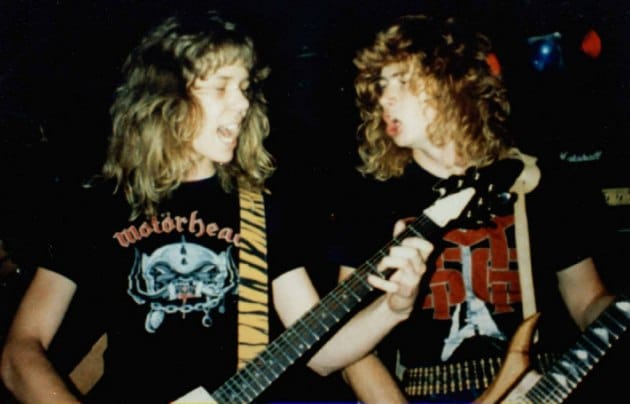
It is important to remember that Metallica was formed in California in 1981 by James Hetfield and Lars Ulrich.
Later on, Ron McGovney and Dave Mustaine joined on bass and lead guitar, respectively.
Before achieving fame, they played in Bay Area bars, creating riffs, solos, and compositions.
Mustaine contributed key riffs and musical ideas, but was expelled due to problems with alcohol.
After being replaced by guitarist Kirk Hammett from the band Exodus, he created the band Megadeth.
Now Mustaine has made a new sound recording of Ride the Lightning, a track that has sparked controversy among fans.
Megadeth fans say that Mustaine only recorded a song that belongs to him.
Metallica fans say that Mustaine just made a Metallica cover.
Neither side is entirely correct. Below is a historical account followed by a legal analysis explaining why.
TL:DR – Thrash summary
- Dave Mustaine contributed original musical material to Metallica’s compositions before he was fired.
- Those contributions were incorporated into Metallica albums, and Mustaine holds co-authorship on the corresponding musical works, including Ride the Lightning.
- Megadeth’s recording of Ride the Lightning is a lawful new recording of a jointly owned composition, not an unauthorized cover requiring a mechanical license.
- Being a co-author means you can legally record your own version of a song, but you must still share publishing income with other co-authors.
Dave Mustaine created Megadeth to take revenge on Metallica
Mustaine, in a moment of anger and dissatisfaction with his situation, decided to act in order to move to a more satisfactory position.
His goal was clear: to surpass Metallica.
His band had to be faster, sharper, heavier, more technical, and more aggressive.
That was when he read about the concept of megadeath (meaning one million deaths) and decided to name his project accordingly.
Megadeath = Megadeth
Trademark pro-tip: names with intentional misspellings, like Megadeth, are excellent examples of strong trademarks. Fantasy names (made-up words), such as Metallica, are also particularly strong.
This explains why, within the early repertoire of both bands, there are two songs that are musically quite similar, yet there’s no legal controversy from it.
Metallica’s The Four Horsemen and Megadeth’s Mechanix.
The difference? Megadeth’s version is rawer and played at a higher tempo.
Can this be done legally? Yes, as long as there are co-authors in both bands and the song exploitation respects their rights.
The controversy that gave us two of the best discographies in metal history
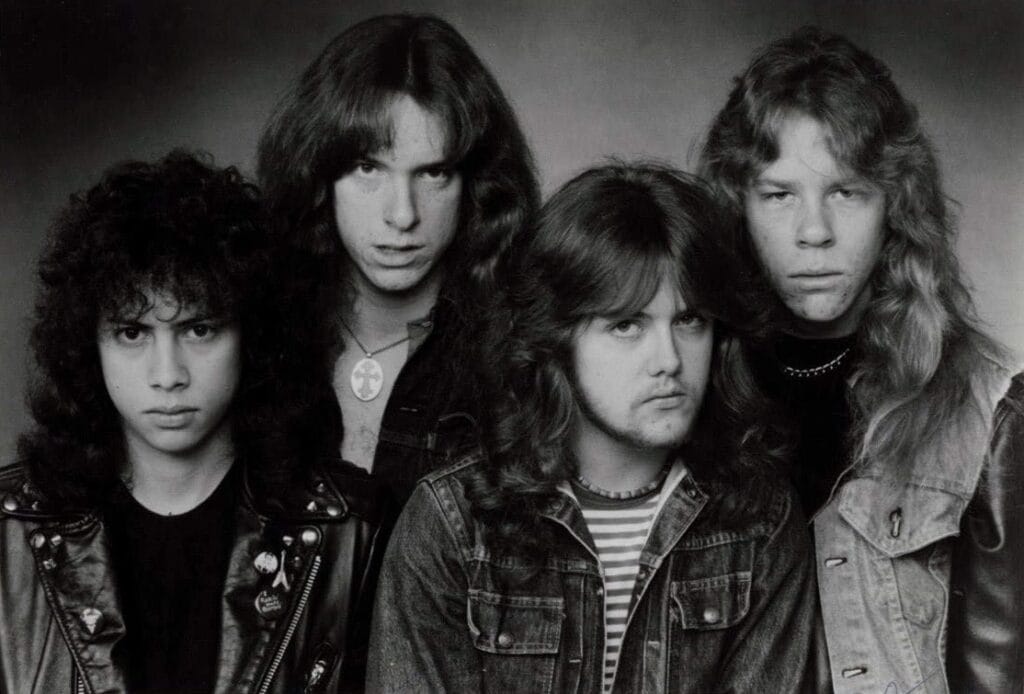
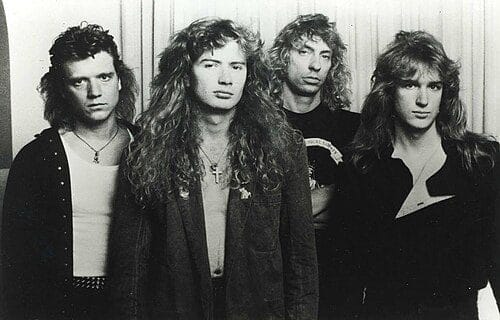
These two bands developed in parallel.
While Metallica released the legendary Master of Puppets in 1986, Megadeth responded months later with the epic Peace Sells… But Who’s Buying?.
The fan rivalry was fierce, and the albums were exceptional.
It is no coincidence that this era of intense rivalry coincides with the artistic peak of both bands.
Regardless of personal preference, both Metallica and Megadeth produced some of the most important albums in the genre.
The debate between Megadeth and Metallica fans is nothing new: co-authorships are controversial
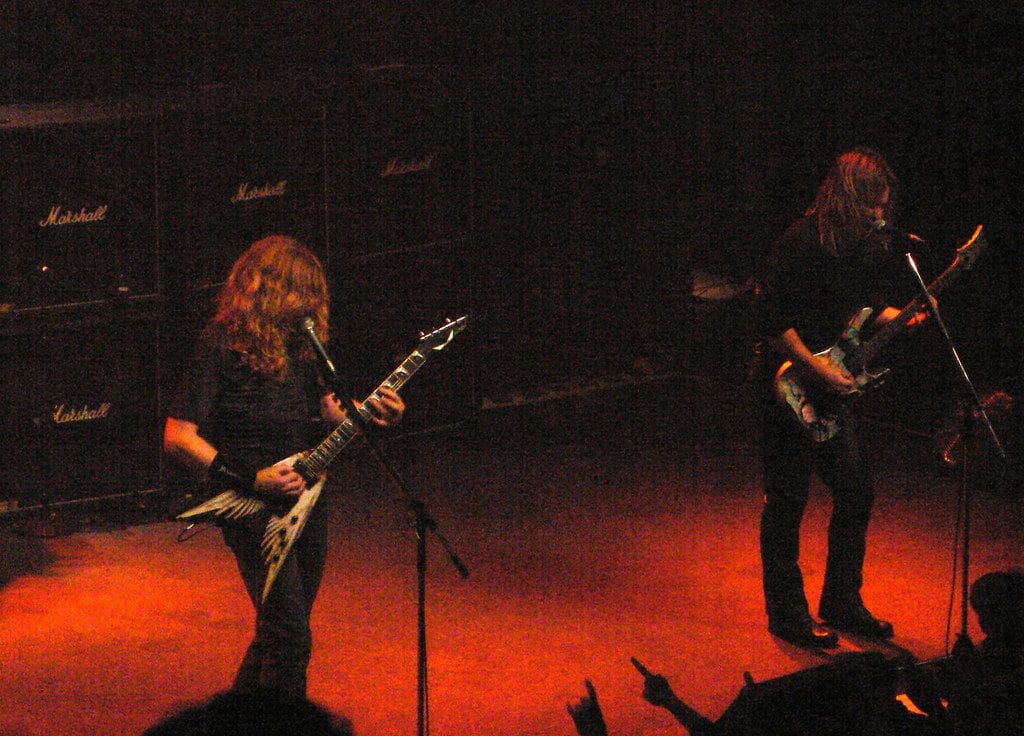
The core of the controversy lies between two extreme positions.
- Those who argue that Mustaine composed everything and Metallica merely appropriated his work.
- Those who argue that Mustaine contributed only minor ideas that do not rise to the level of authorship.
This article exists to clarify these claims under copyright law.
Why co-authorships are a hot topic
Because of ego, credit, and ultimately, for money reasons.
Co-authorship generates income that comes from the publishing business.
If a musician is not a co-author but merely performs on a recording, their rights are typically limited to related rights in the sound recording (often assigned to the label) a.k.a master rights.
This means that if you’re not a co-author you don’t get publishing, and if master rights are owned by the label, you’re not most likely not getting income from neither the composition nor the master exploitation.
This distinction is precisely why disputes over authorship within bands are so common.
Which songs include contributions by Mustaine?
Mustaine’s contributions extend across two Metallica albums: Kill ’Em All and Ride the Lightning.
The song at issue here is Ride the Lightning.
Mustaine is a recognized co-author of the musical composition credited on the album.
This is due to his contribution of original and substantial riffs that are inseparable from the final composition.
While musical debates remain, the legal conclusion is clear: describing Megadeth’s recording as a “cover” reflects a misunderstanding of copyright categories.
Practical tip for musicians: Always document who contributed what during rehearsals or writing sessions it can save your career and relationships later.
Conclusion: Megadeth recorded a lawful new version of a jointly authored composition
From a copyright law perspective, Megadeth’s recording is a new fixation of a musical work jointly owned by Dave Mustaine.
Legally, a cover implies the use of a composition by someone who is not an author and therefore requires a mechanical license.
Because Mustaine is a co-author, no such license is required. However, he remains subject to the obligation to account to the other co-authors for any publishing income generated.
Thus, while calling it a Metallica cover may sound provocative, it is legally inaccurate.
How co-authorship works under copyright law
Under U.S. law, joint authorship exists when two or more authors contribute copyrightable expression with the intent that their contributions merge into a single work.
Contributions must be original, more than de minimis, and inseparable from the final work. Distinctive riffs and instrumental sections may qualify when they are structurally essential to the composition.
Mustaine’s contributions to Ride the Lightning meet this standard, which is why his co-authorship is recognized.
House’s tip: Being part of a band doesn’t automatically give you ownership. Only original contributions that are incorporated count as co-authorship as long as they satisfy the joint authorship criteria found in copyright law.